
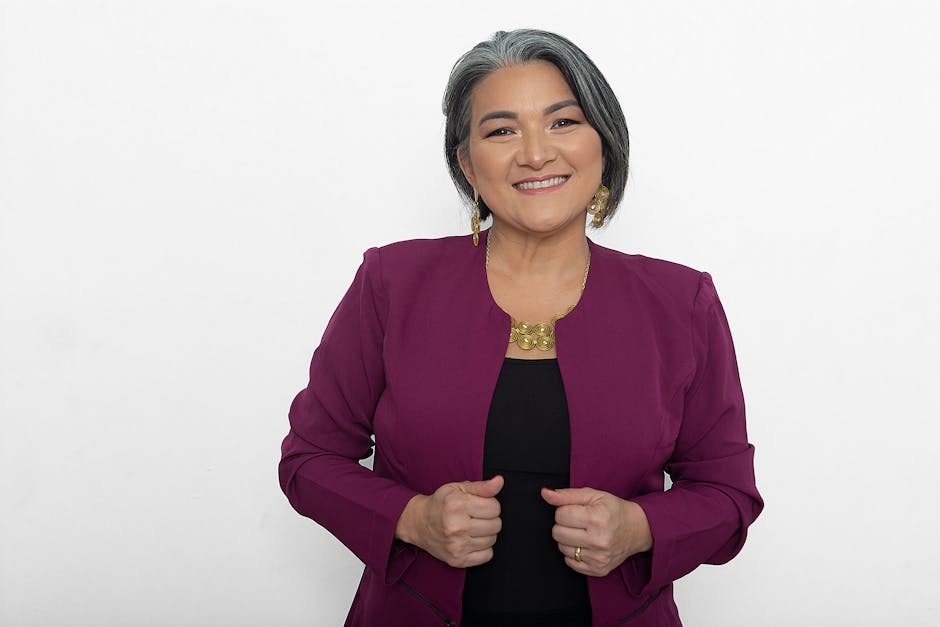
Breaking Barriers at the Top
For years, women in boardrooms were expected to be the exception, not the rule. A diversity checkbox. A headline booster. But that’s changed and it’s still changing fast. Today, women aren’t just in the room; they’re leading it. They’re chairing meetings, signing off on billion dollar deals, and reshaping entire industries on their terms.
What’s different now is authority. The old token seats at the table those are getting pushed aside for real decision making power. Women leaders are showing up as strategists, visionaries, and drivers of change. They are rewriting what leadership even looks like: less smoke and mirrors, more transparency; fewer power plays, more forward momentum.
And it’s not just about balance. It’s about results. Study after study ties board diversity to stronger financial returns, better risk management, and more ethical decision making. Companies with women in leadership roles are outpacing those without. Not because of PR but because diverse thinking makes better business.
Look at women like Reshma Saujani, founder of Girls Who Code, redefining tech’s pipeline from the top down. Or Rosalind Brewer, one of the only Black women CEOs of a Fortune 500 company, bringing a grounded, human centered perspective to corporate leadership. These women are doing more than breaking glass ceilings. They’re rebuilding the infrastructure.
Leadership isn’t about checking a box anymore. It’s about shifting the blueprint completely. And the smartest companies are following their lead.
The Power of Grassroots Change
Change doesn’t always start in boardrooms it often begins on street corners, kitchen tables, and community centers. Across the country, women are organizing rides to polls, setting up mutual aid networks, and showing up for neighbors long before institutions do. These leaders aren’t waiting for permission they’re building what needs to exist and asking questions later.
From small town rallies to national dialogues, women led grassroots movements are shaping the future. They’re driving campaigns around abortion access, climate justice, and racial equity. Through tireless community organizing, they’re influencing policies most lawmakers weren’t even thinking about. Their impact stretches farther than the spotlight often shows.
Take the mothers who led the charge for police accountability after losing their children, or the organizers behind tenant rights victories in cities where housing justice felt impossible. Think of women coordinating food delivery networks during crises, or those creating safe spaces for queer youth in conservative areas. These aren’t one off moments they’re sustained acts of leadership.
These efforts prove something important: real power doesn’t require a title. It requires showing up. Local change, driven by women committed to mutual care and action, scales into national reform faster than many expect. It’s time they were recognized not as exceptions, but as the blueprint.
Bridging Leadership Styles

Empathy isn’t just a buzzword it’s the backbone of how effective leaders, whether in a corner office or a community center, get things done. It’s what allows a CEO to understand her team’s burnout before it tanks a project. It’s what fuels a local organizer to knock on one more door before sunrise. While their environments look different, the emotional intelligence at their core often looks the same.
There’s a throughline connecting boardroom executives and street level changemakers: resilience, clarity, and the ability to read the room. Both know how to listen without being passive. Both know decisive action doesn’t require loudness. And both know that growth organizational or social happens when the people around you feel seen and supported.
Collaboration beats competition almost every time. You see it in how women leaders build coalitions instead of silos. They open space for others to lead too, redefining power as something you share, not hoard. That mindset isn’t just nice; it’s strategic. The most sustainable change comes from networks, not lone heroes.
At the center of this movement is something deeper than shared goals it’s shared trust. Sisterhood and leadership isn’t a soft concept; it’s a cultural engine. Women are leaning into collective strength, drawing from each other’s lived experiences, and building leadership models that can stretch from Wall Street to local food banks and actually work.
Real World Impact
The line between boardroom strategy and street level impact is thinner than it looks. Across the world, women are showing what it means to lead on both fronts pulling from spreadsheets and grassroots insight in equal measure. These aren’t neatly divided roles. Many of today’s most influential changemakers are corporate veterans turned community builders or vice versa.
Take someone like Fatima Coleman. After years navigating the private sector as a systems analyst, she redirected her career to launch a nonprofit tackling data inequity in underserved neighborhoods. Her budgeting acumen? Crucial. Her management strategies? Adapted into community organizing frameworks. She didn’t start over she built on experience.
Same story, different lens for Andrea Lin, a startup founder who spent half her week consulting in finance and the other half at labor protests. She bridged both worlds by creating a fintech tool to support gig workers’ rights connecting access to capital with the fight for fair employment. It’s business with a backbone.
The thread through all of this is mentorship. Women who’ve balanced both stages are now lifting up others to do the same. Leadership looks different when it’s shared. Foundations like EWM’s Sisterhood and Leadership are scaling impact through collective knowledge, not competition. It’s a quiet but powerful shift: using every skill earned whether at a desk or a rally to build systems that include more people, not fewer.
Reshaping the Future
A Defining Moment for Women in Leadership
We are living in a pivotal time where women’s leadership is more visible, impactful, and necessary than ever. Across global movements, women are demanding equity and creating it. From climate justice to tech innovation, women are not just participating in change, they are engineering it from the ground up.
Why this moment matters:
Widespread advocacy for gender equity is reshaping industries
Global campaigns are amplifying women’s voices in politics, STEM, the arts, and beyond
Greater visibility means greater accountability, pushing institutions to adapt
The Next Generation is Already Here
Younger generations are not waiting for permission they’re claiming space and building new models of leadership. Inspired by trailblazers yet unafraid to forge new paths, young women are expanding what leadership looks like and where it can thrive.
How younger women are leading the shift:
Launching digital platforms and startups focused on equity and inclusion
Creating global solidarity networks through social media and grassroots coalitions
Transforming traditional leadership roles to center collaboration, justice, and sustainability
Tools to Keep the Momentum Going
For this movement to grow, access to knowledge and resources is essential. Luckily, more tools than ever are tailored to support women in both entrepreneurial and activist spaces.
Resources fueling forward motion:
Mentorship communities and leadership accelerators
Online courses and funding opportunities for women led initiatives
Platforms like Sisterhood and Leadership that center connection, collaboration, and growth
A Call to Action
Leadership isn’t confined to a title or an office. It lives in conference calls and protest chants, pitch decks and neighborhood meetings. The future belongs to women who build not just for themselves, but for their communities. Wherever they lead, impact follows.

 Carolety Graysons is the kind of writer who genuinely cannot publish something without checking it twice. Maybe three times. They came to women's empowerment news through years of hands-on work rather than theory, which means the things they writes about — Women's Empowerment News, Women in Leadership Profiles, Fashion and Style Tips, among other areas — are things they has actually tested, questioned, and revised opinions on more than once.
That shows in the work. Carolety's pieces tend to go a level deeper than most. Not in a way that becomes unreadable, but in a way that makes you realize you'd been missing something important. They has a habit of finding the detail that everybody else glosses over and making it the center of the story — which sounds simple, but takes a rare combination of curiosity and patience to pull off consistently. The writing never feels rushed. It feels like someone who sat with the subject long enough to actually understand it.
Outside of specific topics, what Carolety cares about most is whether the reader walks away with something useful. Not impressed. Not entertained. Useful. That's a harder bar to clear than it sounds, and they clears it more often than not — which is why readers tend to remember Carolety's articles long after they've forgotten the headline.
Carolety Graysons is the kind of writer who genuinely cannot publish something without checking it twice. Maybe three times. They came to women's empowerment news through years of hands-on work rather than theory, which means the things they writes about — Women's Empowerment News, Women in Leadership Profiles, Fashion and Style Tips, among other areas — are things they has actually tested, questioned, and revised opinions on more than once.
That shows in the work. Carolety's pieces tend to go a level deeper than most. Not in a way that becomes unreadable, but in a way that makes you realize you'd been missing something important. They has a habit of finding the detail that everybody else glosses over and making it the center of the story — which sounds simple, but takes a rare combination of curiosity and patience to pull off consistently. The writing never feels rushed. It feels like someone who sat with the subject long enough to actually understand it.
Outside of specific topics, what Carolety cares about most is whether the reader walks away with something useful. Not impressed. Not entertained. Useful. That's a harder bar to clear than it sounds, and they clears it more often than not — which is why readers tend to remember Carolety's articles long after they've forgotten the headline.